Recently, I purchased several new bushwhacking related products (i.e. toys that I rationalized purchasing based on their use during bushwhacking trips). They included a new handheld GPS, a tripod (head and legs) and a personal digital voice recorder. I purchased each of the products for different reasons. The GPS replaced (and upgraded) my previous GPS unit since the old unit was starting to display the irritating tendency of blinking out during the most inopportune moments. The tripod was purchased to allow for increasing the quality of my digital photographs and therefore increasing the aesthetics of this website. Lastly, the personal digital voice recorder was supposed to replace the need for me to take written notes during bushwhacking trips. Although I will definitely write up a detailed review of each product when I have thoroughly experienced them in the field, I thought I would report some information about the new products including some of my rationale for choosing them.
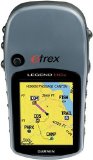
The new handheld GPS is a Garmin eTrex Legend HCx. This new unit replaces my Garmin eTrex Legend, whose screen started to blink-out on occasion last year. I wanted to replace it before the entire unit stopped functioning completely, which I knew would occur at the worst possible moment (i.e. when I was out on a long bushwhack). The Garmin eTrex Legend HCx features a high-sensitivity receiver, a color screen to increase visibility under bright light conditions, and a microSD card slot. The high-sensitivity receiver reportedly increases signal strength even under dense canopy, which can be important especially in dense spruce/fir so frequently found near wetlands in the Adirondacks. Maintaining signal strength was definitely an issue with my previous unit. The color screen is supposed to increase visibility under bright light conditions such as those found on clear, sunny days. Although such conditions are rarely found for long in the Adirondacks (or is it only when I am in the area?), I did have trouble reading the black-and-white screen on my previous unit during those brief periods of direct sunshine. Lastly, the microSD card slot allows for displaying the topographical information right on the GPS unit screen instead of having to map UTM coordinates from the unit to my topographic map as I had to with my previous GPS unit. In addition to purchasing a new GPS unit, I also purchased the Garmin TOPO US 24K Northeast (Penn., New Jersey, New York, Conn., Rhode Island, Mass., Vermont, New Hampshire and Maine) on microSD/SD Card, which includes all of the topographical information for the northeastern states, including the Adirondacks.
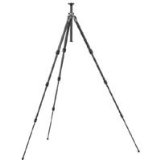
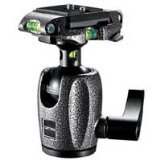
The tripod head and legs I purchased were a Gitzo GH2781TQR Series 2 Traveler Ball Head with Quick Release, and a Gitzo GT0541 Series 0 Carbon Fiber 6X 4-Section Tripod . After purchasing a digital SLR camera last year, I had always planned on getting a tripod to assist with taking higher quality photographs in which to adorn this website posts. I originally was going to try and use a monopod that I bought years ago with a light weight spotting scope but I broke it last year while taking pictures at an unnamed body of water near the Cowboy Beaver Meadow in the Pepperbox Wilderness (a trip report coming this fall or winter). Given the monopod’s limited stability and current condition I determined it was necessary to purchase a tripod for recording my bushwhacking adventures through digital photographs. I decided on Gitzo for their reputation for quality and the multitude of light weight products they offered. In addition, Gitzo was offering a $100 rebate for purchasing both a tripod head and legs at the time of my purchase (it was only $40 for either just the tripod legs or head).
The two characteristics I was looking for in tripod legs were light weight (since I had to carry it through rough terrain) and compact size (so it would easily fit into my already bulging backpack). Unfortunately, these two criteria tend to be inversely related. I narrowed my search down to two different tripods in the Gitzo Mountaineer product line: the GT0531 and the GT0541 . Both tripods are made from carbon fiber 6X, which accounts for their very light weights of 1.59 (0.72 kg) and 1.72 lbs (0.78 kg), respectively. The GT0541 is a 4-section tripod (it has four sections to each of the three legs), which allows it to fold up to a compact length of 18.9 inches (48 cm), where the GT0531 is a 3-section with a total folded length of only 20.87 inches (53 cm). I decided the 2-inch difference in length was more important than the fraction of a pound in weight so I purchased the GT0541 .
For a tripod head, I was looking for something with the lightest weight possible that could support a rather small digital SLR camera (I currently have an Olympus Evolt E420 10MP Digital SLR Camera with 25mm f/2.8 Pancake Zuiko Lens, which I will review in a future post). The main criteria for tripod head selection was identical to the tripod legs: compact size and light weight. First, I had to decide which type of head would be optimal for my uses (i.e. landscapes currently, but at some point I would like to start performing some wildlife photography). Of the four different head types (ball, pan-tilt, geared and fluid), I decided the ball head would be the most versatile and the lightest and most compact. I quickly zeroed in on the Gitzo GH2781TQR Series 2 Traveler Ball Head with Quick Release, which was both compact and lightweight. Gitzo offers two different versions of this head: one with quick release (allows for easily removing the camera from the head) and one without. Even though the quick release version was slightly heavier (14.4 oz (408.2 g) vs. 11.4 oz (322.1 g)), I decided being able to quickly place and remove the camera from the head was more important than the additional 3 ounces in weight. In addition, the four leveling bubbles pushed the one with the quick release over-the-top in my decision process.
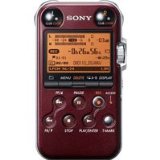
The final piece of new equipment was a digital personal voice recorder. Most of the personal voice recorders on the market do not appear to be manufactured for rugged field use (i.e. they are made of rather flimsy plastic). I quickly settled on SONY as the only manufacturer of ruggedly made personal voice recorders on the market at a reasonable price. Although SONY makes two different rugged personal voice recorders (or portable audio recorders), I chose the less expensive Sony PCM-M10 Portable Recorder. It is made of metal instead of plastic and therefore should hold up better in the field. The PCM-M10 has user friendly operation (I have yet to actually read the instructions), 4 GB of built in memory, microSD/memory stick slot, WAV/MP3 format recording, and it only weighs 5.63 ounces with the included two AA alkaline batteries (I replaced them with lithium batteries for even lighter weight). It comes in two different colors: black and red. I chose red for two different reasons. Too much of my stuff is already black (e.g. binoculars, camera, tripod legs, tripod head, etc.) and red should be easier to spot on the forest floor if I should set it down or drop it.